
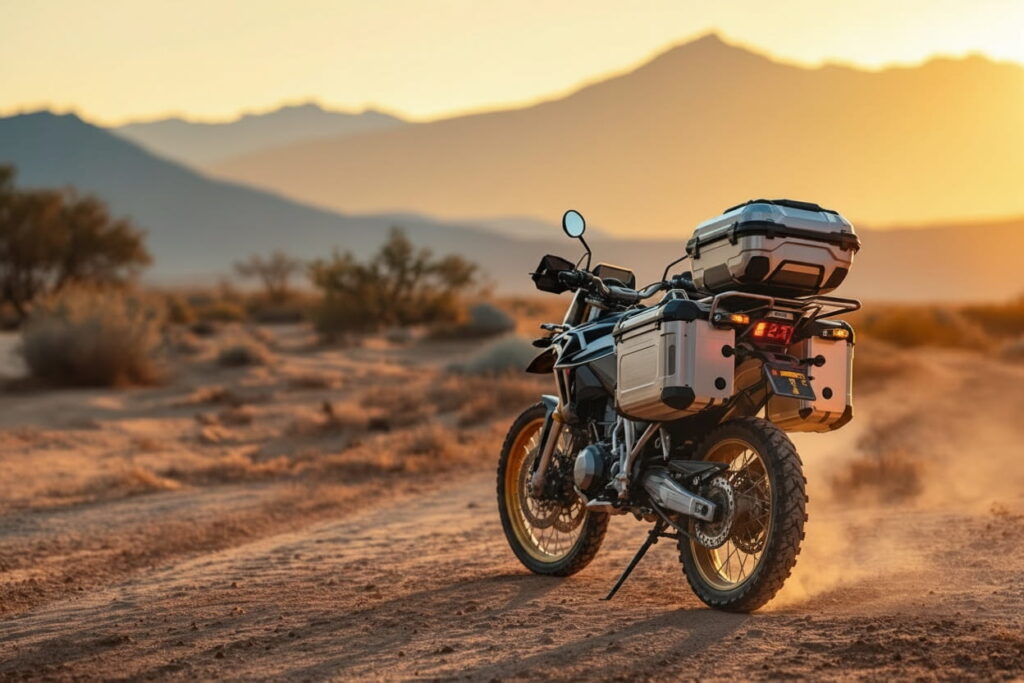
From waterproof panniers to crash bars, discover the essentials for multi-day off-road motorcycle touring. Taking a motorcycle far beyond the paved highways offers a sense of freedom that few other travel methods can match. You get to experience untouched landscapes, navigate challenging terrain, and camp under stars free from city light pollution.
However, leaving civilization behind requires serious preparation. Remote routes lack cellular service, gas stations, and repair shops. When you are hours away from the nearest town, you are entirely self-reliant. Every piece of equipment you pack must serve a distinct purpose, withstand heavy abuse, and keep you safe when conditions change rapidly.
Building the perfect setup takes time and experience. The right equipment protects your motorcycle from damage, keeps your personal items dry, and ensures you can call for help if an emergency strikes. Below is a comprehensive breakdown of the essential equipment you need to tackle remote trails with confidence.
Essential Luggage: Waterproof Panniers and Soft Bags
Choosing the right luggage system dictates how your motorcycle handles on rough terrain. While hard aluminum cases look great and offer decent security, they can be dangerous on technical trails. If you catch a foot under a hard box during a slow-speed drop, the risk of injury is high.
Soft luggage is the standard choice for aggressive off-road touring. High-quality soft panniers absorb impacts during a crash, keeping both the rider and the motorcycle’s subframe safe. When shopping for soft bags, look for roll-top closures and welded seams. A heavy downpour or a deep river crossing can quickly ruin a trip if your spare clothes and sleeping bag get soaked. Dry bags strapped to the tail rack offer additional modular storage for lighter items.
Bike Protection: Crash Bars and Skid Plates
Dropping a heavily loaded adventure bike on a rocky trail is almost inevitable. Without proper armor, a simple tip-over can crack an engine casing or shatter expensive plastic fairings, ending your trip instantly.
A heavy-duty aluminum skid plate is the first upgrade any adventure rider should install. Factory skid plates are often made of thin metal or plastic, which will not survive a hard impact against a boulder or a tree stump. A proper aftermarket skid plate shields the exhaust headers and the vulnerable oil pan.
Tubular steel crash bars are equally vital. They wrap around the engine and radiator, creating a protective cage. If the bike goes down, the crash bars take the brunt of the impact. They also provide a convenient mounting point for auxiliary lights and small tool bags.
Navigation and Communication Tools for Off-Grid Routes
Losing your way in the backcountry is a serious hazard. Relying solely on a smartphone mounted to your handlebars is risky, as phone cameras can vibrate apart, and screens easily overheat in direct sunlight.
A dedicated motorcycle GPS unit is built to handle heavy vibrations, dust, and rain. These devices allow you to load detailed topographical maps and custom GPX tracks. It is always wise to carry a physical paper map as a reliable backup if your electronics fail.
Communication is just as critical as navigation. A satellite messenger device is a non-negotiable item for remote travel. Devices like a Garmin inReach or a SPOT tracker allow you to send text messages to family members, track your route, and trigger an SOS to search and rescue teams if a life-threatening emergency occurs.
Camping Gear for Multi-Day Trips
After a long day of wrestling a heavy motorcycle through mud and sand, a comfortable camp setup is highly rewarding. Space and weight are limited, so backpacking-style camping gear is ideal.
Pack a lightweight, freestanding tent that can be pitched quickly on rocky ground. A high-quality sleeping pad provides insulation from the cold earth and gives your body the support it needs to recover. Match your sleeping bag to the lowest expected temperatures of your route.
For cooking, a compact multi-fuel stove or a simple isobutane burner takes up minimal space. Nesting titanium pots and a reliable water filtration system ensure you can safely prepare meals and stay hydrated without hauling gallons of water on the bike.
Emergency Kits and Tool Kits
Mechanical failures and minor injuries are part of the adventure touring experience. A well-thought-out tool kit allows you to perform trailside repairs and keep the motorcycle moving.
Your tool roll should be tailored specifically to your motorcycle’s fasteners. Essential items include tire levers, a patch kit or spare tubes, a compact 12V air compressor, zip ties, duct tape, and a metal epoxy like J-B Weld for patching cracked engine cases.
A comprehensive first aid kit must also be easily accessible. Pack supplies to treat burns, cuts, and sprains. Include a tourniquet, sterile gauze, athletic tape, and any personal medications you might need.
Ready for the Unknown
Success on remote routes comes down to how well you prepare before the wheels ever touch the dirt. Equipping your motorcycle with robust protection, packing reliable camping gear, and carrying the right emergency tools ensures you can handle whatever the trail throws your way.
Review your gear checklist, double-check your motorcycle’s maintenance, and map out your route. The backcountry is waiting, and with the right setup, you are fully equipped to explore it safely.