
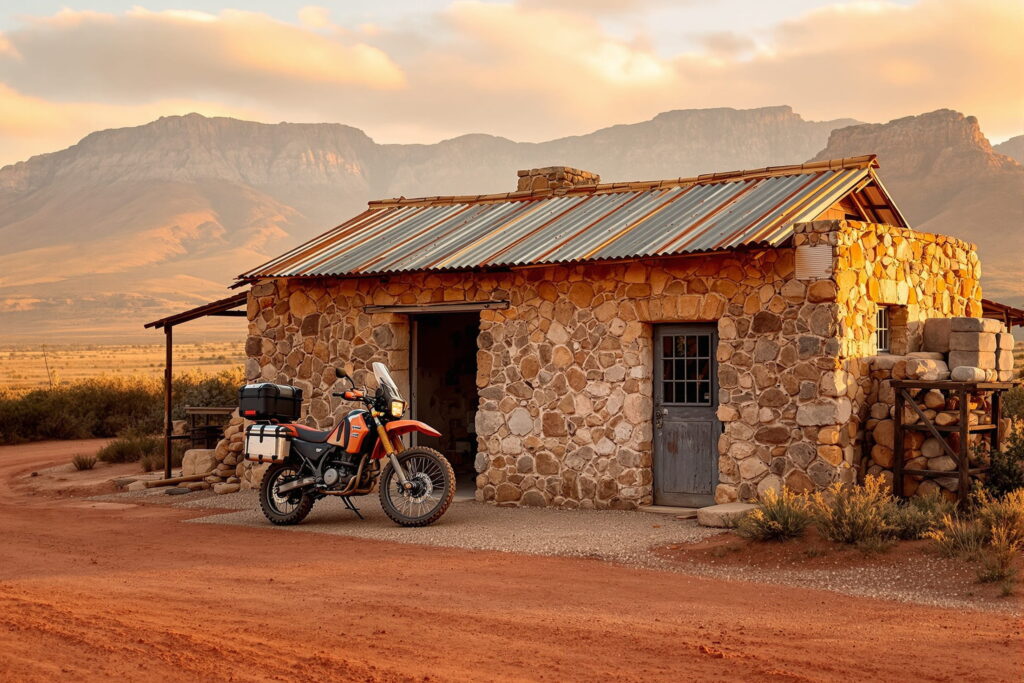
The Karoo is vast, empty, and beautiful — but it also demands respect for fuel range and water supplies. Our signature loop covers roughly 320 km of mixed gravel and dirt, and knowing where to stop turns a survival ride into a leisurely adventure.
Riding through this expansive South African semi-desert offers an unparalleled sense of freedom. The sweeping plains, jagged mountain horizons, and endless dirt roads draw riders looking to escape city traffic and reconnect with raw nature. You will find yourself surrounded by profound silence, interrupted only by the rumble of your engine and the crunch of gravel beneath your tires.
However, this rugged terrain is notoriously unforgiving to the unprepared. With temperatures that can soar during the day and plummet at night, careful planning is the key to a successful journey. Knowing exactly where to rest, refuel, and rehydrate ensures you can focus entirely on the ride. This guide breaks down the most reliable rest stops along the route and provides crucial tips for managing your essential supplies.
Top Rest Stops Along the 320 km Loop
Breaking up your ride is vital for maintaining concentration and physical stamina on challenging dirt roads. Here are the highly recommended spots to kick down your side stand.
The Historic Padstal
About 80 kilometers into the loop, you will encounter a traditional Karoo padstal (farm stall). These quirky, family-owned shops are an oasis for weary riders. Stop here for a cup of strong moer-koffie (traditional local coffee) and a freshly baked venison pie. The shaded porches provide a perfect opportunity to get out of the sun, stretch your back, and adjust your riding gear before tackling the next gravel sector.
The Mountain Pass Viewpoint
At the halfway mark, the route climbs sharply into the surrounding mountain ranges. Near the summit, a designated gravel pull-off offers sweeping panoramic views of the valley below. While this stop lacks facilities, it is an essential place to pause. The altitude brings a welcome drop in temperature. Use this time to check your tire pressures, inspect your suspension, and take a few photographs of the spectacular landscape.
The Desert Diner
Around the 240-kilometer mark, fatigue usually starts to set in. Fortunately, this section of the loop brings you through a small frontier town featuring a motorcycle-friendly diner. This is your main lunch stop. The diner serves hearty meals and ice-cold beverages, giving your body the fuel it needs for the final stretch. It is also an excellent hub for gathering local intel. Chatting with fellow riders or farmers can alert you to upcoming road washouts or loose sand patches.
Fuel and Hydration: Surviving the Semi-Desert
A breakdown in the Karoo is rarely a simple inconvenience. Managing your motorcycle’s fuel and your own hydration requires strict discipline.
Mastering Your Fuel Strategy
Never pass a working fuel pump in the Karoo. Even if your tank is still three-quarters full, top it up. Power outages and dry pumps are common occurrences in remote towns, meaning the next scheduled stop might not be an option. For this 320 km loop, calculate your motorcycle’s fuel consumption based on heavy gravel riding, which burns more petrol than highway cruising. Always carry a secondary fuel bladder or mounted jerry can with at least three to five extra liters.
Smart Water Management
Dehydration sneaks up quickly when riding in high temperatures, as the wind rapidly evaporates your sweat. Do not rely solely on water bottles packed in your hard luggage. Wear a hydration backpack with a drinking tube so you can take small, frequent sips while moving. Pack a minimum of three liters of water per person for a day ride. Adding electrolyte powders to your water will help replace the essential minerals lost to the desert heat, keeping your reflexes sharp and preventing muscle cramps.
Gear Up for Your Next Karoo Adventure
Proper planning transforms the harsh environment of the Karoo into one of the most rewarding motorcycle routes in the world. By marking these essential rest stops on your GPS and maintaining a strict fuel and water regimen, you guarantee a safe return to base camp.
Before you pack your panniers, take a moment to double-check your motorcycle’s maintenance schedule. Inspect your tires, clean your air filter, and verify your tool roll is fully stocked. Safe travels, and enjoy the ride.